




















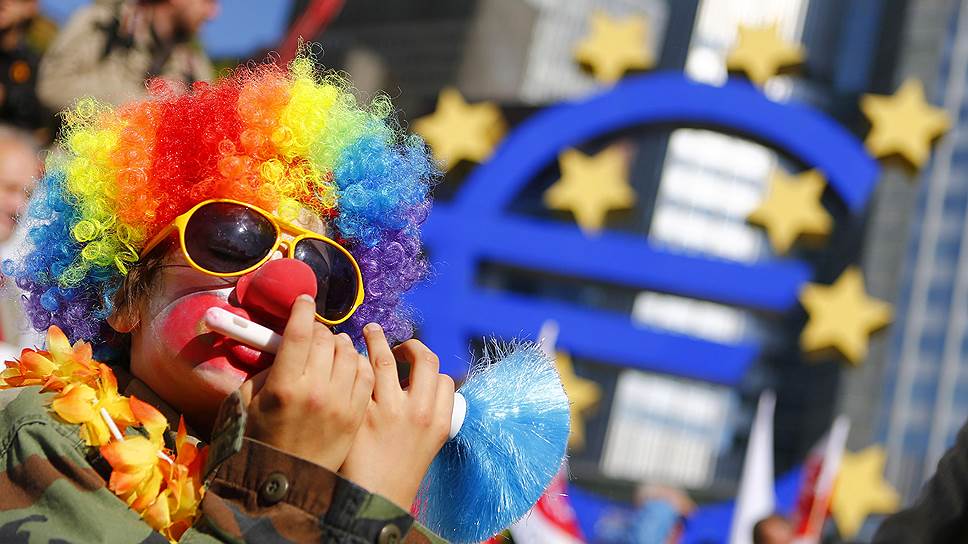
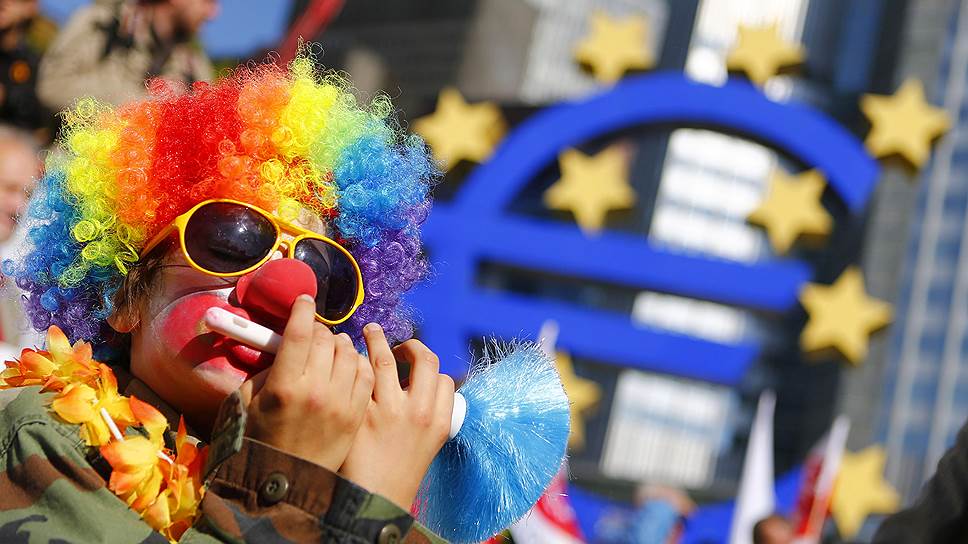
25 years ago — on January 1, 1999 — the euro was introduced as the single currency of the European Union. The path to creating a single currency on a continent where dozens, if not hundreds of national currencies have existed for centuries, was long. But the experiment was not unique. In the world before the euro, and now there are other transnational currencies. Not all such projects are successful, and some, for example on the creation of a global currency, still remain at the stage of proposals by individual economists.
The path to the introduction of the euro was long and this is one of the examples when the single currency project was successfully implemented
The path to the introduction of the euro was long and this is one of the examples when the single currency project was successfully implemented
From the “currency snake” to a single currency
The first ideas for creating a monetary union similar to the modern eurozone appeared back in the 1920s. Then this was proposed by German Foreign Minister Gustav Stresemann. The ideas of that time referred to the Latin Monetary (or Monetary) Union that existed since the mid-19th century, which included France, Italy, Belgium, Switzerland and several other countries. It effectively ceased to function with the outbreak of the First World War, and was officially disbanded in 1927. True, in this case we were not talking about a single currency, but about the standards of a fixed ratio between gold and silver in each country, as well as the ratio of exchange rates between countries.
However, Stresemann's idea remained an idea: the time turned out to be inappropriate. The countries of the continent then increasingly diverged and introduced protectionist measures.

A more serious attempt to create a monetary union was made in the 1950s and 1960s. Then there were more prerequisites for this: since 1957, the European Economic Community (EEC) existed, the goal of which was to increase economic integration in Europe. Of course, the level of this integration was far from how things are in the current EU, but countries were already moving in this direction.
But so far there was no talk of creating a single currency, only about a more stable relationship between the currencies of European countries. This was called a currency snake — the EEC countries agreed to limit fluctuations in the exchange rates of their currencies against each other to no more than ±0.75%.
After the collapse of the Bretton Woods system and the gold exchange standard in the 1970s — when the dollar was no longer pegged to gold — the EEC was unable to maintain the given level of fluctuations. The boundaries of exchange rate fluctuations were expanded, and some countries, for example France, from time to time even left the agreement.
European countries that were part of the Latin Monetary Union from 1866 to 1914. Red: Member states of the monetary union. Orange: countries participating under a bilateral agreement. Blue: countries participating by unilateral agreement. Green: colonies, temporary members
European countries that were part of the Latin Monetary Union from 1866 to 1914. Red: Member states of the monetary union. Orange: countries participating under a bilateral agreement. Blue: countries participating by unilateral agreement. Green: colonies, temporary members
In 1979, another step was taken towards a single European currency. The European Monetary System emerged with the European currency unit ECU. Over the next two decades, the ECU was used by the participating countries for non-cash payments.
And only after that, more and more often, European countries began to discuss the creation of a full-fledged single currency.
Many countries perceived this with caution, fearing for the stability of their currency and perceiving the local currency as an important sign of sovereignty.
There were quite a few objections, for example, from Germany, whose currency — the German mark — was very stable.
In 1993, the Maastricht Treaty establishing the European Union was signed. It also assumed the introduction of a single currency in all member countries, with the exception of Great Britain and Denmark, which clearly stated their determination to preserve the pound sterling and the Danish krone.
Calculators for the euro and the funeral of the mark
Calculators for the euro and the funeral of the mark
Calculators for the euro and the funeral of the mark
Calculators for the euro and the funeral of the mark
Calculators for the euro and the funeral of the mark
Calculators for the euro and the funeral of the mark
The euro was introduced gradually, overcoming the resistance of skeptics. However, everything went without any problems. Today, the eurozone includes 20 countries
The euro was introduced gradually, overcoming the resistance of skeptics. However, everything went without any problems. Today, the eurozone includes 20 countries
In 1994, the European Monetary Institute was created — it was engaged in this preparation and became the predecessor of the current European Central Bank.
In 1995, they came up with a name for the common European currency — the euro. Quite stringent requirements for the participating countries were discussed — on budget deficits, debt levels, and so on. Around the same time, they began developing the design of a new currency. If all euro banknotes are uniform, then each country mints coins separately and with its own design. This makes coins from different countries attractive to collectors — especially relatively rare ones such as coins from the Vatican or San Marino (these dwarf states are not officially part of the eurozone, but use the euro).


In 1999, the single currency was introduced in 11 countries: Germany, France, Spain, Portugal, Italy, the Netherlands, Belgium, Luxembourg, Austria, Finland and Ireland. At first, only for non-cash payments, and at the same time the rates of all currencies against the euro were frozen. For example, approximately two German marks, six and a half French francs or almost two thousand Italian lire were exchanged for one euro.
In 2000, Greece joined them. Subsequently, the number of eurozone countries increased to 20: it also included Poland, Slovenia, Croatia, Slovakia, Estonia, Latvia, Lithuania, Malta.
Finally, three years after the introduction of non-cash payments, from January 1, 2002, the euro began to be used for cash circulation. The minting and printing of new coins and banknotes began in 1998. By the time cash was introduced, 7.4 billion banknotes and more than 38 billion coins were ready for release into circulation.
At the end of 2001, preparations began for the introduction of euro cash: all countries issued special sets that included euro coins and with which residents could get acquainted with the new money.
Many countries have released special calculators for converting local currencies into euros, in the colors of the EU, with the symbols of the union and the country.
Different countries held events that were supposed to prepare residents for the introduction of a new currency. In Finland, on January 1, 2002, at midnight, the Central Bank opened for an hour so that residents could immediately exchange old money for euros. A pyramid made of euros was installed in the central Constitution Square in Athens. And in the city of Gifhorn in northern Germany, a symbolic funeral of the German mark was held.
European Central Bank President Christine Lagarde puts her signature on a banknote after being elected to office
European Central Bank President Christine Lagarde puts her signature on a banknote after election to office
After January 1, it was possible to pay in both euros and local currencies for another two months — the exception was Germany, where from January 1 it was possible to pay only in the new currency. The authorities of different countries expected excitement and even chaos, because they had never carried out such a large-scale currency exchange before. However, in fact, everything went smoothly — people gradually exchanged old money for new ones, traders at first accepted old local currencies, but gave change in euros. And prices were indicated in both currencies for quite some time. In some countries, at first there were not enough new coins and banknotes for change, and cafes and shops, having switched to the euro, sharply increased prices, but basically everything went without incident.
Former colonies and world currency
In the Caribbean, as well as on the islands of Anguilla and Montserrat, the East Caribbean dollar is in use
In the Caribbean countries, as well as on the islands of Anguilla and Montserrat, the East Caribbean dollar is in use
There are other examples of currencies that operate in several countries at the same time. There are several monetary unions of this kind in former colonies that are still economically connected.
One such currency is the East Caribbean dollar. It is used in six Caribbean countries — Antigua and Barbuda, Dominica, Grenada, St Kitts and Nevis, St Lucia, St Vincent and the Grenadines, as well as two British overseas territories — Anguilla and Montserrat. All of these countries were former colonies of Great Britain, so the East Caribbean dollar replaced the colonial British West Indian dollar in 1965.

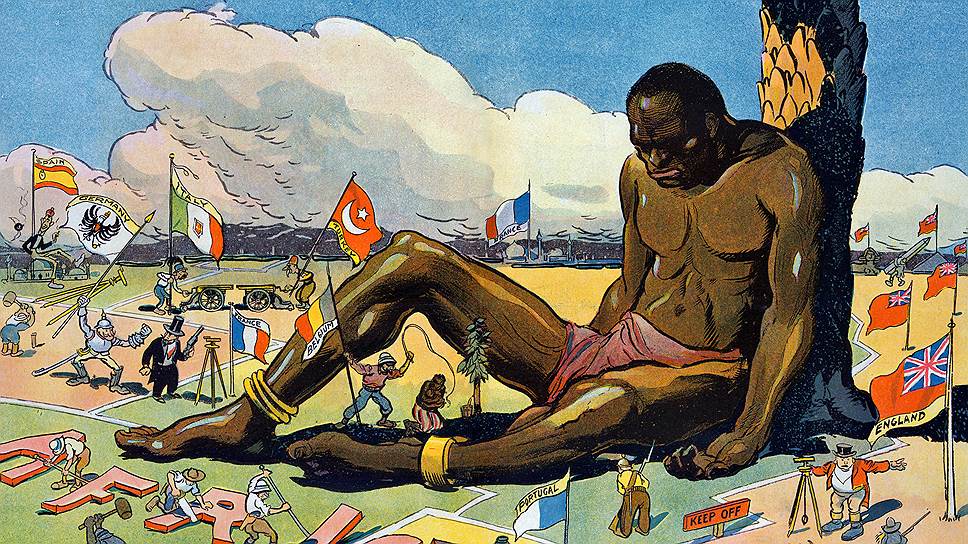
Two more large associations of countries that have agreed on one currency are located in Africa. These are the West African franc and the Central African franc. It is no coincidence that their names are so similar — they both come from the so-called CFA franc introduced by France in 1945 in its colonies in West and Central Africa. Initially, this name stood for Colonies francaises d`Afrique (French colonies in Africa).
After the countries of the region gained independence in the 1960s, it began to be interpreted as Communaute financiere africaine (African Financial Community ) in the newly formed states of West Africa and as La Cooperation financiere en Afrique Centrale (Financial Cooperation in Central Africa) in the countries of Central Africa.
It was then that the CFA franc split into these two currencies. The West African CFA franc is used in eight countries — Benin, Burkina Faso, Guinea-Bissau, Ivory Coast, Mali, Niger, Senegal and Togo. Central African CFA franc — in six countries: Gabon, Cameroon, Republic of the Congo, Central African Republic, Chad and Equatorial Guinea.
West African CFA francs used in Benin, Burkina Faso, Guinea-Bissau, Ivory Coast, Mali, Niger, Senegal and Togo
West African CFA francs used in Benin, Burkina Faso, Guinea-Bissau, Ivory Coast, Mali, Niger, Senegal and Togo
These are two different currencies with different types of banknotes and coins, but they still have a lot in common. So, their exchange rate was first fixed against the franc, and now — against the euro. Several West African countries in the Economic Community of West African Countries want to replace the West African CFA franc with a new currency, the Eco. Initially, the eco was going to be introduced in 2009, then this date was postponed several times, now the introduction of the new currency is scheduled for 2027.
This is not the only case where the introduction of a single currency by several countries has been planned for quite some time, but in reality has not yet happened. For example, four Gulf countries — Saudi Arabia, Kuwait, Qatar and Bahrain — wanted to introduce a single Khaliji currency back in 2015, but it does not exist yet.
Members of the Eurasian Economic Union also discussed the possibility of introducing a common currency — Altyn or Evraz, but things did not go further than discussions.
There are also projects for a global currency, but they are even further from real implementation. One such project was proposed by the Belgian economist Bernard Lietar. He proposed the creation of a global currency, Terra, the rate of which would be based on a basket of 9-12 essential commodities, such as wheat, oil, copper, gold and others. Another suggestion is a currency called DEY, which is short for “dollar, euro, yen.”
Not a symbol of sovereignty, but a means of payment
Thoughts about preserving the national currency, which were relevant for European countries, are perceived in many other countries as an unacceptable luxury. This primarily concerns small states without a strong economy, neighboring or located close to major powers.
Australian (left) and Singapore dollars at an exchange office. The first, besides Australia, are used by several small island states
Australian (left) and Singapore dollars at the exchange office. The first, in addition to Australia, is used by several small island states
For example, the Australian dollar is also used in Kiribati, Nauru and Tuvalu. There are countries that use the euro as a currency without being officially part of the eurozone: these include the European dwarf states of Andorra, Monaco, Vatican City and San Marino, and in addition to them — Montenegro and the Republic of Kosovo (not recognized by all states). As for the American dollar, there are countries in which it is the main local currency in different parts of the world. These are, in particular, El Salvador, Zimbabwe, East Timor and Micronesia.


























Свежие комментарии