

















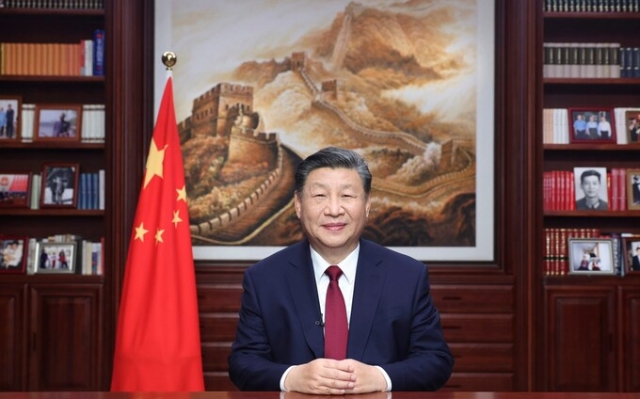
 Chinese President Xi Jinping delivers a televised New Year's message from Beijing. Photo: Ju Peng/Xinhua
Xi Jinping, China's leader, vowed his country would «definitely be reunited» during a televised New Year's address, just weeks before key elections in Taiwan.
«All Chinese people both sides of the Taiwan Strait should be bound by a common sense of purpose and share the glory of the rejuvenation of the Chinese nation,” said Xi Jinping, noting that 2024 marks the 75th anniversary of the founding of the People's Republic of China (PRC).
Xi Jinping has promised to “reunite” the two sides of the Strait by 2049, the target date for achieving the “Chinese Dream.” The People's Republic of China, which has never ruled Taiwan, views the democratic island state as part of its territory and promises to annex it by force if necessary.
Tsai Ing-wen, Taiwan's president, responded to Xi Jinping's comments yesterday. in his last New Year's address. She stressed that Taiwan's future will be determined democratically by its own people, but also called for the resumption of cross-strait relations, expressing hope for «healthy and orderly exchanges» through «peace, equality, democracy and dialogue» as soon as possible. br />
“Faced with the global conflict between democracy, freedom and authoritarianism, Taiwan's only choice in the future is to continue to uphold democracy and protect peace,” Ms. Tsai said.
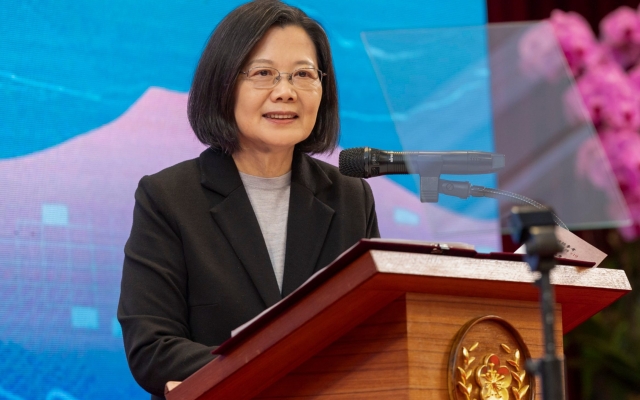 Taiwan President Tsai Ing-wen is delivering his final New Year's address before elections later this month. Photo: OFFICE OF THE PRESIDENT OF TAIWAN
The comments came less than two weeks ahead of Taiwan's. presidential and legislative elections are scheduled for January 13.
William Lai, the current leader and vice-president of the ruling Democratic Progressive Party (DPP), said he is open to negotiations with China. The PRC calls the DPP a “separatist force” advocating Taiwanese independence, although the DPP charter states that Taiwan is already an independent, sovereign entity and does not need to declare “formal independence.”
China broke off negotiations with Taiwan in 2016 after Tsai's first election victory. Since then, China has also increased military pressure, increasingly sending naval ships and military aircraft into Taipei's territorial waters and airspace.
Two other presidential hopefuls, Hou Yu of the China-friendly Kuomintang and Ko Wen-je of the Taiwan People's Party, say more contact with China is needed to maintain peace in the Taiwan Strait.
Election interference
Experts have warned of increased Chinese election interference through military aggression, economic coercion and information warfare as the election approaches. The government has warned that China has stepped up interference through religious organizations in recent months, while more than 400 Taiwanese village leaders have taken part in Chinese-sponsored trips across the mainland.
Taiwan's election ministry says 157 are currently are under investigation for 77 alleged cases of alleged election interference. So far, at least one person has been charged.
In his New Year's speech, Xi Jinping also promised to promote economic reform policies. He acknowledged that the country is in financial trouble as it faces an unprecedented economic downturn marked by a housing crisis, high youth unemployment and local government debt.
China «must face headwinds,» Xi said Jinping. “Some businesses have had a hard time. Some people had difficulty finding work and meeting basic needs,” he added, but promised to accelerate modernization and development and “deepen reform and opening up” in 2024.



















Свежие комментарии