





























The rodent does not have standard protection against infections
Scientists at the Institute of Molecular Biology named after V.A. Engelhardt RAS made an amazing discovery: naked mole rats, these amazing rodents that can live up to 40 years, refused to produce CD1 proteins — key proteins in the fight against infections. These proteins play an important role in the immune system of most mammals, helping to fight infections. The discovery was published in the journal Biology Direct.
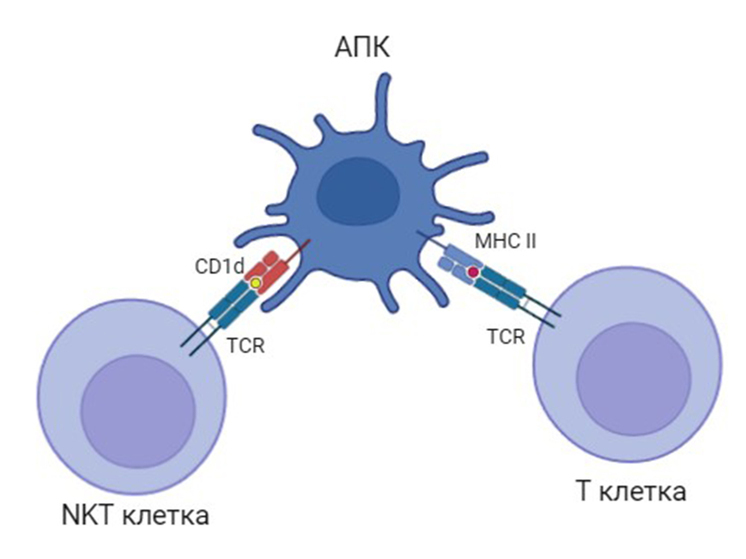
 CD-1-mediated activation of T-killers. Source: A. Zamaraev
CD1 proteins act as signal flags on the surface of immune system cells. They grab fragments of bacteria and viruses, exposing them so that other immune system cells can recognize and destroy the threat.
As reported to MK by the Russian Science Foundation, the research team discovered that the genes responsible for producing CD1 do not function in naked mole rats. This is the first known case of a mammal completely abandoning these important components of immunity.
According to one of the study participants, PhD in Biology Alexey Zamarayev, scientists were surprised that naked mole rats, which live in large colonies underground, where the risk of infection is especially high, had developed such an unconventional survival strategy.
The researchers suggest that the loss of CD1 is compensated for by other elements of the naked mole rat immune system, which continue to be actively studied. Perhaps the key role is played by myeloid cells and specific types of T-lymphocytes found in these animals. The scientists also plan to continue studying other proteins — MR1, which can perform functions similar to CD1.
This discovery not only sheds light on the amazing adaptability of naked mole rats, but may also be important for the development of new approaches to the treatment of infectious diseases in humans.
In addition to scientists from the Engelhardt Institute, specialists from the Institute of Molecular and Cell Biology of the Siberian Branch of the Russian Academy of Sciences, Moscow State University, and the Moscow Institute of Microbiology and Microbiology also took part in the study. M.V. Lomonosov and the Swedish Karolinska Institute.














Свежие комментарии