






























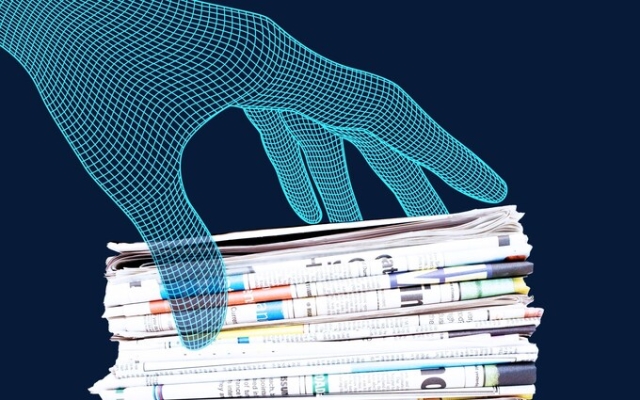

TikTok's Chinese owner has been accused of using UK news sites to train its rival ChatGPT without permission or fair payment.
Publishers including The Guardian, Daily Mail and The Telegraph are believed to have been victims of a bot run by Beijing-based tech giant Bytedance.
The company said its bot, called Bytespider, was used for «search engine optimization» purposes.
However, news organizations are concerned that their articles are being used without permission to train chatbots and have raised concerns about copyright violations.
Publishers expressed further concerns about the lack of transparency surrounding the Bytedance bot, which resulted in them being unable to block it.
Media outlets including the BBC, Guardian, New York Times and CNN have blocked OpenAI, the creator of ChatGPT, from tracking their sites due to copyright issues.
This can be done using something called a robots.txt file, which tells web crawlers what parts of the site they are allowed to visit.
Although Bytespider is believed to use robots.txt files, the exact code required to activate the block is unknown.
Owen Meredith, chief executive of the News Media Association, said: «This is yet another demonstration of how big tech companies are running roughshod over the intellectual property of creators and rights holders to take their content and profit without permission.» , notice or transparency.
“No one should have to accept the mass theft of their content in this way.”
Bytedance is reportedly preparing for its own adoption of artificial intelligence (AI), following similar moves by companies such as OpenAI, Google and Microsoft.
The Chinese tech giant is reportedly developing an open platform that will allow users to create their own chatbots.
In its response to a House of Lords inquiry into artificial intelligence, The Guardian said the lack of transparency underlines why publishers should be able to opt-in to web scraping rather than being forced to opt out.
Industry sources said similar suspicious bot activity was reported by the Independent newspaper, as well as local news publishers including National World and Tindle.
The rapid emergence of artificial intelligence has caused alarm among news outlets and other creative organizations amid growing evidence that tech giants are using intellectual property without permission.
The Daily Mail is currently preparing for a legal battle with Google over claims that the company used hundreds of thousands of its online news stories to train its chatbot Bard.
Technology companies insist that their use of copyrighted material is justified by fair use provisions.
But arts organizations have responded to these claims by arguing that their intellectual property is being used for commercial gain.
The row intensified after Google executives said they had the right to use content unless it was behind a paywall.
Free-to-access publishers such as The Guardian have warned that the approach threatens the principles of the open web.
The Guardian added: «We must be clear that even if these data sets were cleared on the basis of non-commercial exploitation, the reality is that they were used to benefit some of the richest and most powerful people.» technological enterprises that have ever existed.»
A Bytedance representative declined to comment.


























Свежие комментарии