











br>
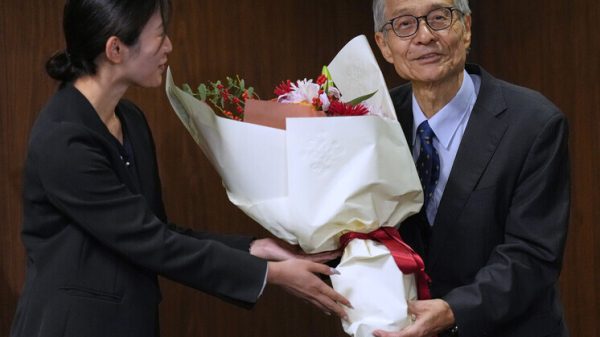
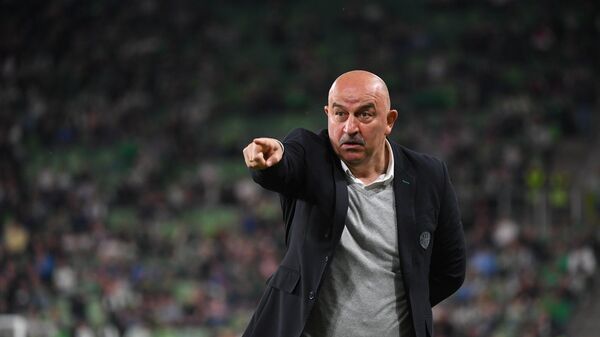
The main news of the week was the appointment of the hero of the 2018 World Cup at home for Russia as the head coach of the Kazakhstan national team. Cherchesov was unemployed for almost a year after being fired from Ferencvaros and returned to work with the national team. Remembering the successes of the Russian national team, the leadership of the Kazakhstan Football Federation is probably counting on something similar now. But the experience of Russian specialists who worked here before Cherchesov suggests that it will not be easy for him.
It is difficult to find a figure in the coaching workshop that would attract as much attention. There were always a lot of rumors around Cherchesov, and after his resignation in Hungary they appeared almost every week. For example, in the fall he was wooed to Saudi Arabia, then to Turkey, they wrote about returning to Spartak to replace Guillermo Abascal, and shortly before the finish of the championship, the specialist’s visit to Nizhny Novgorod gave rise to talk of an imminent appointment to the local team. Whereas a week ago information appeared in the press that Cherchesov was interested in Kazakhstan to replace Magomed Adiev, who ended up leaving for Akhmat.
The option is not the most obvious, since in recent years the Russian coach has chosen the most hype places to work. “Dynamo” with the fight for RPL medals and European cups, “Legia” and “Ferencváros”, dominant in their countries, the Russian team at the home world championship. The national team of Kazakhstan, which has never played in major tournaments, seems to stand out from this series. But in doing so, Cherchesov showed that he is not afraid to solve serious problems with a squad that is modest by European standards. And if he succeeds with it, this line on his resume will be no less valuable than the quarterfinals of the 2018 World Cup or the championship in Hungary.
True, we must remember that for his predecessors the Kazakhstan national team almost never became a springboard. And in many cases it completely turned into a deafening failure.
Pakhomov sent Nazarbayev’s son-in-law and left
Kazakhstan joined UEFA in 2002, and Leonid Pakhomov became the first coach of the team at the new stage of history. The specialist had a wealth of experience, including winning the European Championship with the USSR youth team. The choice was not accidental — football in the country at that moment was in a deplorable state, so a person was needed who could give impetus to its development. But this same circumstance prevented fruitful cooperation. There was such a mess in the football industry that no one could give a sports result. Years later, Pakhomov himself spoke eloquently about the state of local football at the time of his appointment.
“In all endeavors, a coach must receive support from those around him. This is normal European practice. But in the end it turned out that I was the only one responsible for all directions. I even checked the bathhouses to carry out restoration measures. There was no help from officials. Everyone sat and listened , what will I say, and they did not always fulfill the requests. Even more, I got the feeling that everyone was just waiting for me to make a mistake somewhere. At the time when I was in Kazakhstan, the officials simply did not understand that. what the team needs to do to move forward. The infrastructure, to put it mildly, was not at a high level. I tried to explain, but I constantly felt a misunderstanding. They needed a team doctor, a second coach, a selector. one must do all this,” Pakhomov said in an interview with the Fergana agency.
Later, the specialist’s task became even more difficult. The leadership of the federation literally forced him to combine posts in the national team and Kairat. The idea was to create the basis for a national team on the basis of the country's main club. The coach was initially against it, but succumbed to persuasion and also took on Kairat. In the end, it didn’t work out either here or there. At the head of the national team, Pakhomov played nine friendly matches and did not win a single victory with six defeats. And with “Kairat” he scored only eight points in six rounds of the championship.
Pakhomov left both posts in May 2004, just a couple of months before the start of the first qualifying round — the 2006 World Cup. According to the coach, the last straw was a friendly match with Azerbaijan, before which the federation leadership demanded that he win. Kazakhstan played well then, but lost (2:3), and after the meeting the specialist had a conflict with the management. It all ended with Pakhomov having a huge quarrel with the former head of the KFF and also the son-in-law of the country’s president, Rakhat Aliyev, and then sent everyone, turned around and left. It is noteworthy that this was the end of his coaching career.
Krasnozhan was not paid for six months in Kazakhstan
Over the next few years, KFF tried several more options with foreign specialists. The Dutchman Arno Pipers, the German Bernd Storck, and the Czech Miroslav Beranek worked with the team. The first one did best — in the qualification for Euro 2008 the team showed excellent results, including beating Serbia (2:1), sharing points with Belgium (0:0) and making Portugal suffer (1:2). Actually, the Dutchman in Kazakhstan is still considered one of the best coaches in the history of the national team.
In December 2013, KFF parted ways with Beranek and began searching for a new coach. The choice again fell on a Russian specialist — Yuri Krasnozhan, who a couple of months before was fired from Terek for unsatisfactory results. The coach had just over six months before the start of the European Championship qualifying cycle, during which the team played four friendly matches, failing only one — with Hungary (0:3). However, in official matches things were much worse: in ten rounds Kazakhstan scored five points and took penultimate place in the group.
Let us note that in March 2015, Krasnozhan and the team came to Russia for a friendly game. The meeting in Khimki was not very eventful and ended in a goalless draw. By the way, this was one of Fabio Capello’s last matches at the helm of the Russian national team — a few months later he left his post.
< br>Initially, the contract with Krasnozhan was signed until the end of the Euro 2016 qualification with the possibility of extension for another two years. The media reported that the specialist’s salary was an impressive $2.7 million per season. But at the same time there were problems with payments, which is why misunderstandings arose with the leadership of the federation. They wrote that Krasnozhan did not receive money for six months, and at a meeting with officials it was not possible to resolve this issue. KFF was not against extending the agreement, despite the modest results, but then the coach himself decided to leave the team.
«Conditions have been created that make it impossible to work. There was no such thing. Participation in games is one thing. But you need to prepare for these games. In order to prepare, you need to change the system, at least participate in friendly games. When matches are canceled one after another others, then you understand that you don’t need the effect of presence. Apparently, it’s difficult to agree. Secondly, there was no way to agree. I didn’t go into these details as a fact,” Krasnozhan described the reasons for the separation in an interview with Match TV.
Borodyuk was the worst in the history of the Kazakhstan national team
A couple of years later, the KFF came up with the idea of inviting Alexander Borodyuk to the post of head coach of the national team. It’s interesting that before this, the specialist worked at Kairat for only a month. In the first match he won the country's Super Cup, but after failure at the start of the championship (one point in three rounds) he left the club.
On the eve of his appointment to the Kazakhstan national team, the media actively wooed former assistant Guus Hiddink to the national team of Belarus. Later, Borodyuk admitted that he flew to Minsk for negotiations, but they decided to take time to think it over, and then an option from KFF appeared. Three days after the first meeting with the management, the specialist was offered a contract.
At that moment, the qualifying round for the 2018 World Cup was in full swing, but Kazakhstan no longer had a chance to reach the finals. The team scored two points after four rounds, so Borodyuk was taken with an eye on the next tournaments. Nevertheless, the specialist was in a positive mood and expected, if not to compete for a ticket, then at least to drink the blood of the favorites. But it didn’t work out — in the six remaining matches, his players suffered five defeats and were only able to grab points with Armenia (1:1).
Thus, Borodyuk became the worst coach of the Kazakhstan national team in history. Under him, the team earned an average of 0.14 points per match — the same figure as Sergei Timofeev in the early 2000s. The only bright spot was a crushing victory over our own youth team (4:1), but it was not taken into account by FIFA and UEFA.
Against the backdrop of dismal results, the Russian specialist faced serious pressure from the football community. Almost all experts called on the KFF to part with Borodyuk as soon as possible and find a replacement among local coaches. In addition, he tarnished his reputation after the away match with Romania (1:3) at the end of the qualifying round. Then the Kazakhstan team arrived on a plane with the inscription “Uzbekistan”, which caused a stir in the media. They also expected indignation from Borodyuk, but he did not focus on this: “The main thing is that we flew normally.” After this, they also began to make complaints to him that he did not care about the image of the national team.
“There are a lot of people who want to lead, and while other sports have adapted to this, football doesn’t like this approach, and ice hockey, it seems, too. The leadership of Kazakh football interferes with the coach’s work. When I worked there, I constantly encountered this Perhaps Alexander too. As far as I remember, Alexander started with “Kairat”, and then he took over the national team. dates,” says Pakhomov.
Adiev did not fit into the general outline
The story began very similarly with Cherchesov’s predecessor. In 2021, Adiev took charge of Shakhtar from Karaganda, but worked there longer than Borodyuk with Kairat. The specialist’s main achievement was reaching the final of the National Cup, where his players lost to the club from Almaty in a penalty shootout (3:3, 8:9). However, Shakhtar did not start the new season in the best way, and after losing to Akzhayik (0:1) in the seventh round, Adiev announced that he was resigning. And after a couple of days it became known about his appointment to the national team.
The choice was obvious. Two months before, the KFF was headed by the current president, Adilet Barmenkulov, who previously headed the board of directors of Shakhtar. That is, he knew Adiyev and his style of work very well, although the appointment gave rise to talk of some behind-the-scenes games. But even if someone expected «dirty deeds» from the coach in conjunction with the head of the federation, they soon had to admit they were wrong.
Adiev started the League of Nations with an excellent series of five rounds without defeat. The team won four victories in the competition and achieved promotion to League B, in which Cherchesov will play in the fall. This same achievement, according to the new selection rules, gave the team an additional opportunity to qualify for Euro 2024.
Kazakhstan also showed itself excellently in the classical qualifications. At the end of ten rounds, the team scored 18 points and shared third place in the group with Finland — this was the best result in its history. The victory over Denmark took a special place, when the Kazakhs were losing 0:2 after the first half, but snatched three points in the very end. After this, Adiev finally became a fan favorite.
It was not possible to get directly into Germany, but there was still a playoff through the Nations League. True, a real failure awaited Adiev’s team there — in the semi-finals they were beaten like a skating rink by Greece (0:5). However, despite the offensive loss of a historic chance to play at a major tournament, the work of the Russian specialist was highly appreciated.
Last April, Adiev received an invitation from Akhmat, which was suffering in disaster in the RPL. The national team just had a break, so the specialist was released, while expecting that he would return in the summer. Adiev brilliantly solved the problem in Grozny, but at the end of the season he still remained in the capital of Chechnya. Officially, his decision was due to family circumstances, and one can only imagine how disappointed the fans of the Kazakhstan national team were.
Given that Cherchesov was rumored to have been recommended by Adiev, We should expect him to continue the line of his predecessor. On the other hand, the success of the current Akhmat coach was largely a consequence of strong ties with the leadership of the KFF. For once, the federation and the national team coach worked together, which bore fruit. Whether Cherchesov will have the same contact with the leaders or whether it will work out like with Krasnozhan or Borodyuk — we will see in the fall, when the team starts playing in the League of Nations.














Свежие комментарии