
























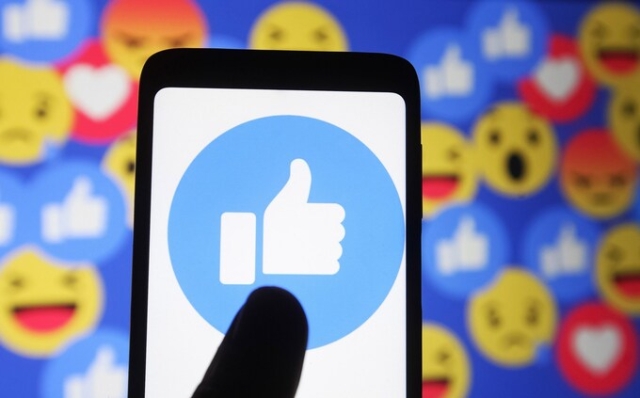
 The case involved a dispute between a grain buyer and a farmer after the latter 'signed' contract with 'thumbs up' emoji Credit: SOPA Images/LightRocket
A Canadian judge has ruled that a «thumbs up» emoji has the same legal effect as a signature.
Controversial over what constitutes consent, appeared before King's Bench in Saskatchewan.
At the center of it was a dispute between Chris Achter, a farmer, and Kent Mickleborough, a grain buyer.
Mr Mickleborough sent out an appeal to all Goths sell him 86 tons of flax at 17 Canadian dollars (£10) a bushel.
Mr Achter answered the call, after which Mr Mickleborough sent a photo of the contract, which called for flax delivery in November.< /p>
The message also said, «Please confirm the linen contract.»
Mr. Achter responded with a thumbs-up emoji, and things went awry.
>Flax prices went up and Mr. Achter didn't deliver the crop.
From his point of view, the emoji only meant he got the contract.
But for Mickleborough, the smiley meant he accepted the deal.
In his 18-page judgment, profusely studded with thumbs-up emojis, the Honorable Judge Timothy Keane grappled with the complexities of contract law and modern mobile communications. .
The judge concluded that the emoji sent from Mr. Akhter's mobile phone did constitute a signature for the purposes of the contract.
It was, the judge added, «not «traditional means» of signing the contract, but it was nonetheless valid.
Mr. Akhter was ordered to pay $82,000 for non-performance of the contract.
























Свежие комментарии